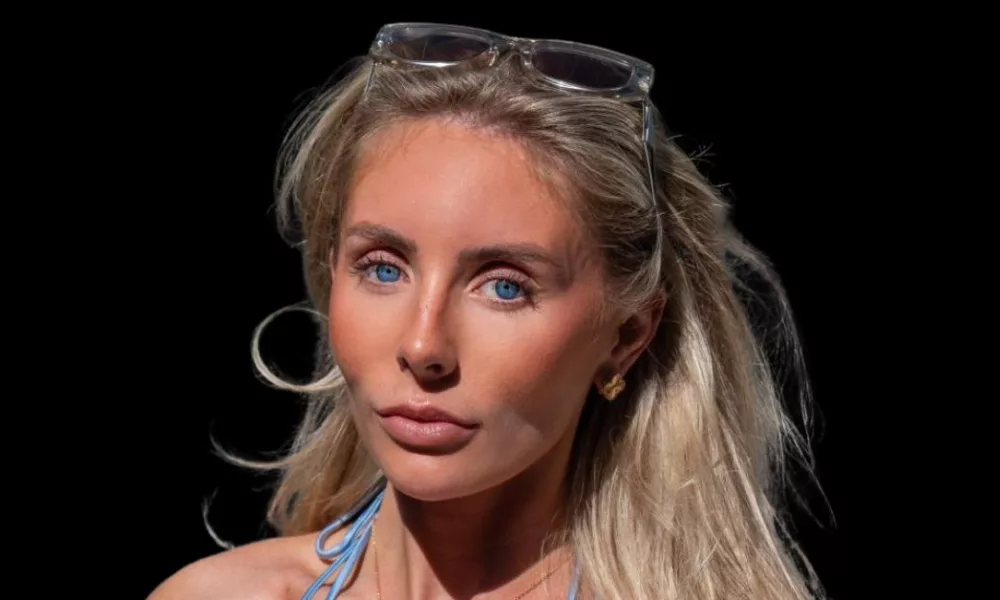
The Bonnie Blue Hoax: Unraveling the 'Fake Pregnancy' Scandal Following a 400-Man 'Breeding' Event
In the often-controversial world of online adult content, few stories have captured public attention and sparked outrage quite like the recent allegations surrounding OnlyFans star, Bonnie Blue. At the heart of the storm is the claim of a pregnancy stemming from an elaborate 400-man "breeding" event, quickly followed by accusations that the entire announcement is a meticulously crafted hoax. The saga surrounding Bonnie Blue's fake pregnancy has ignited fierce debate, forcing a closer look at the ethics of content creation, audience trust, and the pursuit of viral notoriety.
The controversy began with a shocking announcement: Bonnie Blue, real name Tia Billinger, 26, declared she was expecting. This came in the wake of a highly publicized "breeding" event, purportedly held at a lavish London mansion owned by convicted fraudster Lord Davenport. This wasn't Blue's first time at the scandalous estate; it was also the location where she previously claimed to have broken a "world record" by sleeping with over 1,000 men. The idea of a mass "breeding" session, explicitly encouraging men to sign up with the stated goal of making "someone a daddy," was designed to be provocative, and it certainly achieved its aim.
The Unfolding Drama: A 400-Man 'Breeding' Event and a Shocking Claim
The "breeding" event itself was promoted with significant fanfare, drawing hundreds of participants to the opulent London residence. Bonnie Blue's open declaration of her intention to conceive at the event set a precedent for the ensuing drama. Following the session, the adult content creator announced her pregnancy, sharing an image of herself lying next to a figure in a blue balaclava, identified as a 'doctor' carrying out an ultrasound. This initial visual, shrouded in an air of mystery, immediately raised eyebrows among her followers and beyond.
The bold claim, made just weeks after such an unconventional event, quickly spread across social media platforms. While some fans expressed congratulations or disbelief, a significant portion of her audience began to scrutinize the announcement. The nature of the event, coupled with the unusual presentation of the 'ultrasound,' laid the groundwork for the skepticism that would soon turn into full-blown allegations of a hoax. So far, none of the 400 men involved have publicly claimed paternity, adding another layer of ambiguity to the unfolding narrative.
Fans Uncover the 'Prosthetic Bump': Cracks in the Story
Just two weeks after her initial announcement, Bonnie Blue shared a video update from Mexico during Spring Break, showcasing her alleged baby bump while discussing her lifestyle and plans. It was this video, however, that provided the most compelling evidence for her detractors. Dressed in a green bikini, Bonnie Blue gushed about her impending motherhood, but eagle-eyed viewers on TikTok quickly noticed irregularities in her abdomen.
Upon closer inspection, particularly as she bent over, a section of her tummy above her bikini bottoms appeared to be made of silicone, conspicuously crinkling. This led many to believe she was wearing a prosthetic bump, seemingly attached to a belt fastened around her waist. Comments flooded in, with users exclaiming, "Anyone notice the fake baby bump??" and "OMG I didn’t spot it. Thank God." Screenshots and zoomed-in footage circulated rapidly, offering what many considered irrefutable proof of a staged pregnancy. For a deeper dive into the visual evidence, see Bonnie Blue Pregnancy Scandal: Fans Expose Prosthetic Baby Bump.
The Tell-Tale Signs of a Staged Bump:
- Unnatural Movement: The way the 'bump' creased or moved independently of her natural body contours raised suspicion.
- Visible Seams/Attachments: Some viewers claimed to discern a line or attachment point, suggesting the bump was a separate appliance.
- Inconsistent Appearance: The bump's size and shape might appear inconsistent across different posts or angles, or too 'perfect' to be natural.
These observations fuelled the narrative that the Bonnie Blue fake pregnancy was not just speculation but an increasingly evident fabrication, designed to generate further engagement and controversy.
A Pattern of Deception? Bonnie Blue's Recurring Pregnancy Hoaxes
What makes this latest incident particularly significant is that it's not Bonnie Blue's first rodeo when it comes to pregnancy claims. This pattern of alleged deception has led many to question her credibility and the ethics of her content. Last year, following her infamous 1,001-man sex stunt, she also led fans to believe she was expecting. However, she later denied it, stating, "I have never confirmed I was pregnant because I would never, ever lie about pregnancy… (it’s a) step too far."
This previous denial now stands in stark contrast to her current actions, making her current claims even harder for her audience to believe. The repetition of such a sensitive subject for what appears to be promotional purposes has drawn sharp criticism. Distressed women, some struggling with infertility, voiced their disgust online, stating, "Respectfully, this is just an all time low and is actually disgusting. There are couples out there who genuinely deserve a child, try for a child for years and years and cannot fall pregnant and you are out here just playing f*** around and find out?" The ongoing speculation raises questions about her history of claims, which are explored further in Bonnie Blue's Recurring Pregnancy Hoax: Fans Question Her Claims.
Ethical Implications of Repeated Pregnancy Claims:
- Erosion of Trust: Repeated hoaxes can severely damage the creator's credibility with their audience.
- Desensitization to Serious Topics: Faking sensitive life events can trivialise them, potentially disrespecting those genuinely experiencing them.
- Exploitation of Shock Value: While controversy can drive engagement, relying on deception for viral content raises serious ethical questions.
Beyond the Bump: The Business of Controversy in Adult Content
The phenomenon surrounding Bonnie Blue's fake pregnancy transcends a simple individual deception; it offers a potent case study into the evolving dynamics of online content creation, especially within the adult entertainment industry. In a highly competitive landscape, creators are constantly seeking novel ways to stand out, attract subscribers, and generate revenue. For some, this involves pushing boundaries, and for a few, it means venturing into highly controversial or even deceptive stunts.
The motivation behind such an elaborate hoax is likely multifaceted, revolving primarily around:
- Increased Visibility and Engagement: Sensational claims attract media attention, drive social media discussion, and bring new eyes to an OnlyFans page.
- Subscriber Acquisition: More visibility often translates directly into higher subscriber numbers and increased earnings.
- Monetization of Controversy: Even negative attention can be monetized through views, subscriptions, and sponsored content deals.
- Maintaining Relevance: In a fast-paced digital world, creators need continuous hooks to keep their audience interested and prevent them from moving on.
However, this strategy walks a very fine ethical line. While entertainment often involves suspension of disbelief, outright deception about a life-altering event like pregnancy can be deeply offensive and harmful. It exploits genuine human emotions and concerns for personal gain, and it contributes to a broader landscape of misinformation online. Consumers of content, particularly on platforms like OnlyFans where the lines between reality and performance are often blurred, are left to navigate these complex scenarios. It highlights the critical need for media literacy and discernment.
Tips for Critically Evaluating Online Claims:
- Question the Source: Consider the creator's history and potential motivations for making a sensational claim.
- Look for Corroboration: Are there independent sources verifying the information, or is it solely from the creator's own channels?
- Examine Visual Evidence Closely: As seen with Bonnie Blue's video, visual cues can often reveal inconsistencies.
- Be Wary of Rapid, Unverified Announcements: Highly emotional or shocking claims made without credible supporting evidence should always be approached with skepticism.
- Consider the Impact: How might a false claim affect others, especially regarding sensitive topics?
Conclusion
The ongoing saga of Bonnie Blue's fake pregnancy, following the extraordinary 400-man "breeding" event, serves as a stark reminder of the lengths some content creators might go to achieve viral fame and financial success. The strong evidence of a prosthetic bump, coupled with her history of similar claims, strongly suggests a calculated deception. While the pursuit of engagement is a core aspect of digital content creation, this particular narrative raises profound questions about ethical boundaries, the commodification of highly personal experiences, and the responsibility creators have to their audience. As the digital landscape continues to evolve, the onus remains on both creators to act with integrity and on consumers to engage with content critically and thoughtfully.